
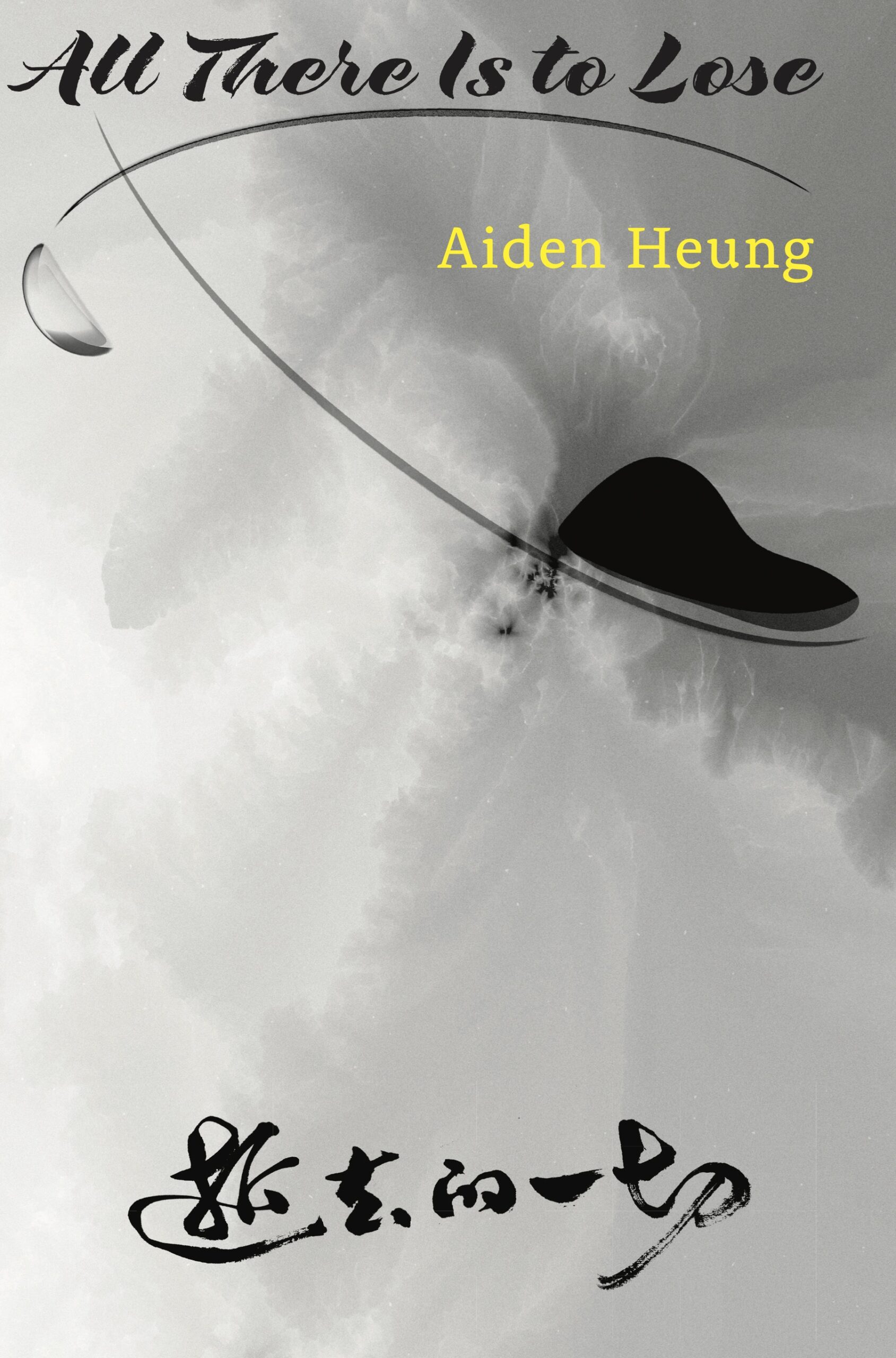
paper • 120 pages • 17.95
ISBN: 978-1-961897-68-7
eISBN: 978-1-961897-69-4
March 2026 • Poetry
Marking Aiden Heung’s debut collection, All There Is to Lose is the 2024 winner of the Four Way Books Levis Prize in Poetry. The selecting judge, National Book Award Finalist Ilya Kaminsky, praises the resonant particularities and depth of feeling found in these poems, which convert “elegy [into] its driving force.” Poet and Critic Felicity Plunkett observes, “Dreams and memory move through these porous, venturesome poems. The spectral jostles with the sensual to tell ‘a story in which I could be found.’ Achily tender, they open to light, love and the jab of a joke.” Poet David Tait notes, “Unsettling and luminous, the poems preserve the memory of Village 915: its volatile seasons and hard-worn inhabitants, its headstones, spirits, and myriad forms of water. Here you’ll find not only poems of lyrical beauty, but of grim exactness.” The result is a stunning achievement of a first book, what Kaminsky identifies as an exemplar of “that ages-old mode of poetry wherein the poet uses language to break bread with the dead, to bring them back to life, if only for the moment, for a portion of the moment, an instant, before the line breaks.” Channeling the poet as medium, “I am the tension on the bow that draws the arrow,” Heung writes in “Epilogue.” “To lose myself — that is my destiny.”
Death Brought Many Images
This time, his toes,
protruding
from the snow sheet.
I couldn’t see his face.
I asked myself: Did he shave?
Father covered my eyes,
turned me out to the door.
I sat at the cold end
of the yard, watched adults
threading through the vestibule.
I was left alone; I appreciated that.
I tossed his name on my tongue
until it went numb. It was not
a conjuring—
I was only a boy.
Shame was physical
I began to gasp.
It was a hot summer day.
A hornet was busy hunting
a hive. What did I know
of its appetite, its spite.
I could have caught it;
I let it go—
Welcome to the world where “people wake up long before roosters”—what I love most in this book is how the images and details carry emotion via perspective, while lyrical in turn of phrase. Often understated, pared down, the poetry lives here in specifics that emote: A mother scrubs clean the headstone carvings, a man remembers laughing after he watched his father enter the river twenty years ago, travelers sleep with their heads on greasy bags. Each detail carries an undertow of emotion. Why is that? Is it because we see it all as the poet sees it, after years have gone by? “…Flesh flowers / in the long hush of seasons,” the poet tells us. Perhaps. Or perhaps the book is captivating because the elegy is its driving force. What is an elegy? That ages-old mode of poetry wherein the poet uses language to break bread with the dead, to bring them back to life, if only for the moment, for a portion of the moment, an instant, before the line breaks. All There Is to Lose is where we find ourselves at any moment. Some of us look back.
While it no doubt takes a village to raise a child, it also takes a bold voice to examine how that village experiences the triumphs, tribulations, and tragedies of everyday life. With language that is as tender as it is narratively absorbing, Aiden Heung draws our attention to the tiny but never forgotten village of 915, tucked in the heart of Southwest China. Regardless of the harsh realities of seasonal drought, of the ever-present darkness lingering on the mountainside, of a river whose literal burdens become symbolic, and of the men and women who cycle on the periphery of our speaker’s childhood, Heung never loses sight of the kindheartedness and good that binds us all together. Heung reassures us that even though home may be indifferent and unrelenting, opening our hearts will give us the practical and poetic tools to “learn to live on.”